
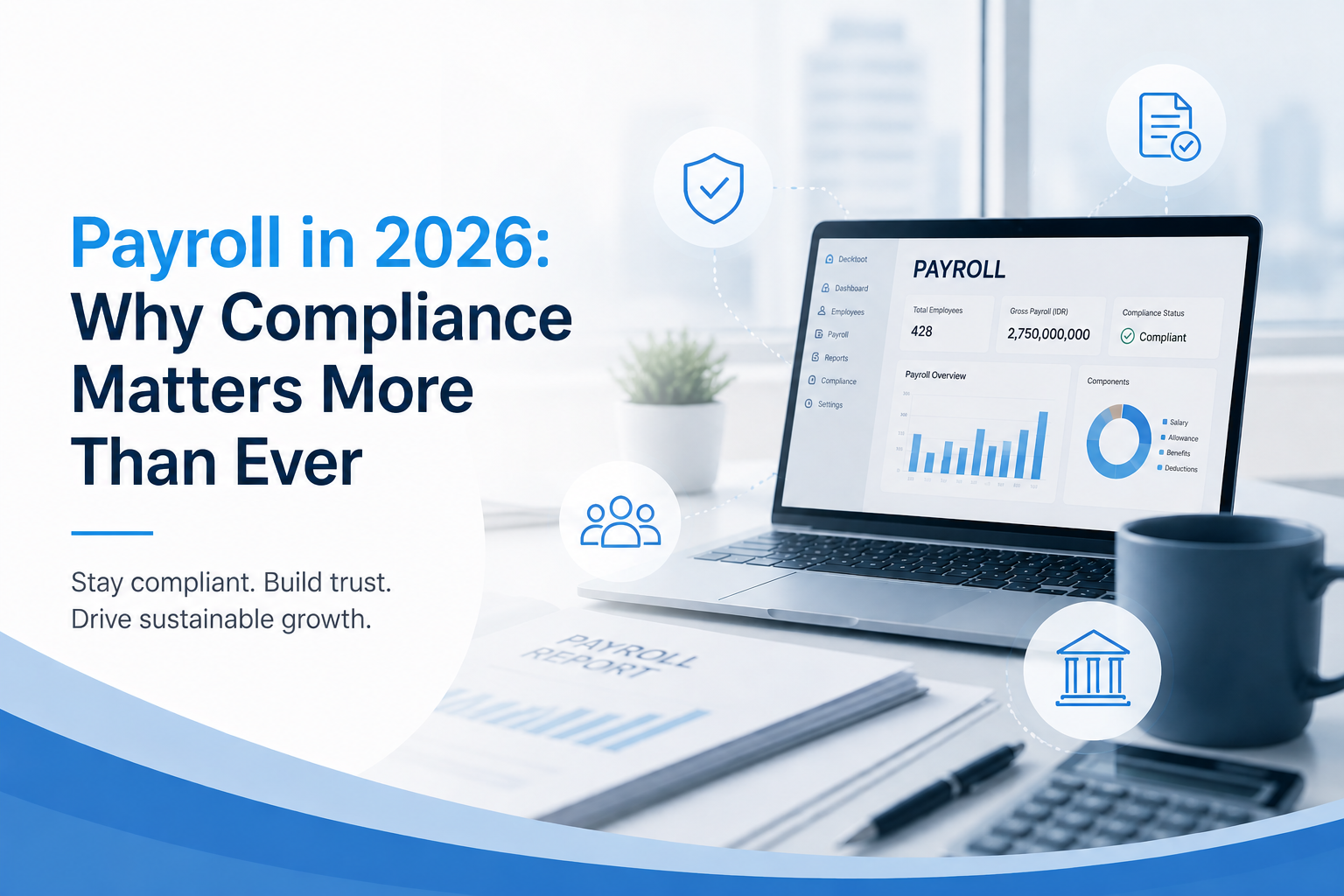
As Indonesia’s regulatory landscape continues to evolve, payroll compliance is no longer just an administrative task—it has become a critical business function. In 2026, companies operating in Indonesia face increasing scrutiny from regulators, tighter labor laws, and growing expectations for transparency.
Failing to comply with payroll regulations can result in financial penalties, reputational damage, and operational disruptions. On the other hand, businesses that prioritize compliance can build stronger employee trust, improve efficiency, and support sustainable growth.
The Changing Payroll Landscape in Indonesia
Indonesia has been actively refining its labor and tax regulations, especially following reforms such as the Omnibus Law on Job Creation. These changes aim to create a more business-friendly environment while ensuring employee protection.
In 2026, payroll management is influenced by several factors:
- Increasing digitalization of tax reporting systems
- Stricter enforcement of employment regulations
- Integration of payroll with national social security programs
Employers must now navigate a more structured and closely monitored system, where even minor errors can trigger audits or penalties.
Key Areas of Payroll Compliance
1. Tax Obligations (PPh 21)
Employers are responsible for calculating, withholding, and reporting employee income tax accurately. Miscalculations or late submissions can lead to fines and interest charges.
2. Social Security Contributions
Compliance with Indonesia’s social security system, including BPJS Kesehatan and BPJS Ketenagakerjaan, is mandatory. Employers must ensure correct contribution amounts and timely payments.
3. Employee Classification
Misclassifying employees (e.g., treating full-time workers as freelancers) can lead to legal risks and back payments.
4. Payroll Reporting & Documentation
Accurate record-keeping is essential. Authorities may request payroll data for audits, and incomplete records can become a liability.
Why Compliance Matters More in 2026
1. Increased Government Oversight
Authorities are leveraging digital systems to monitor payroll activities in real time. This reduces the likelihood of non-compliance going unnoticed.
2. Higher Financial Risks
Penalties for non-compliance are becoming stricter, impacting company finances and cash flow.
3. Reputation and Employer Branding
Employees are more aware of their rights. Payroll errors can damage trust and harm your reputation as an employer.
4. Global Business Standards
For companies expanding into Indonesia, maintaining compliance aligns with international governance and ESG standards.
Common Payroll Compliance Challenges
Businesses in Indonesia often face:
- Frequent regulatory updates
- Complex tax calculations
- Manual payroll processing errors
- Lack of in-house expertise
Without the right systems in place, these challenges can quickly escalate into compliance risks.
How to Stay Compliant in 2026
1. Adopt Payroll Automation
Using modern payroll systems reduces human error and ensures accurate calculations.
2. Stay Updated on Regulations
Regularly monitor changes in labor and tax laws to avoid outdated practices.
3. Conduct Internal Audits
Periodic payroll audits help identify and fix issues before they become major problems.
4. Partner with Experts
Working with professional payroll and compliance service providers ensures accuracy and peace of mind.
The Strategic Value of Payroll Compliance
Payroll compliance is no longer just about avoiding penalties—it is a strategic advantage. Companies that manage payroll effectively can:
- Improve operational efficiency
- Enhance employee satisfaction
- Strengthen regulatory trust
- Support long-term business growth
Conclusion
In 2026, payroll compliance in Indonesia is more important than ever. As regulations tighten and enforcement increases, businesses must take a proactive approach to payroll management.
By investing in the right systems, processes, and expertise, companies can not only stay compliant but also turn payroll into a driver of business success.